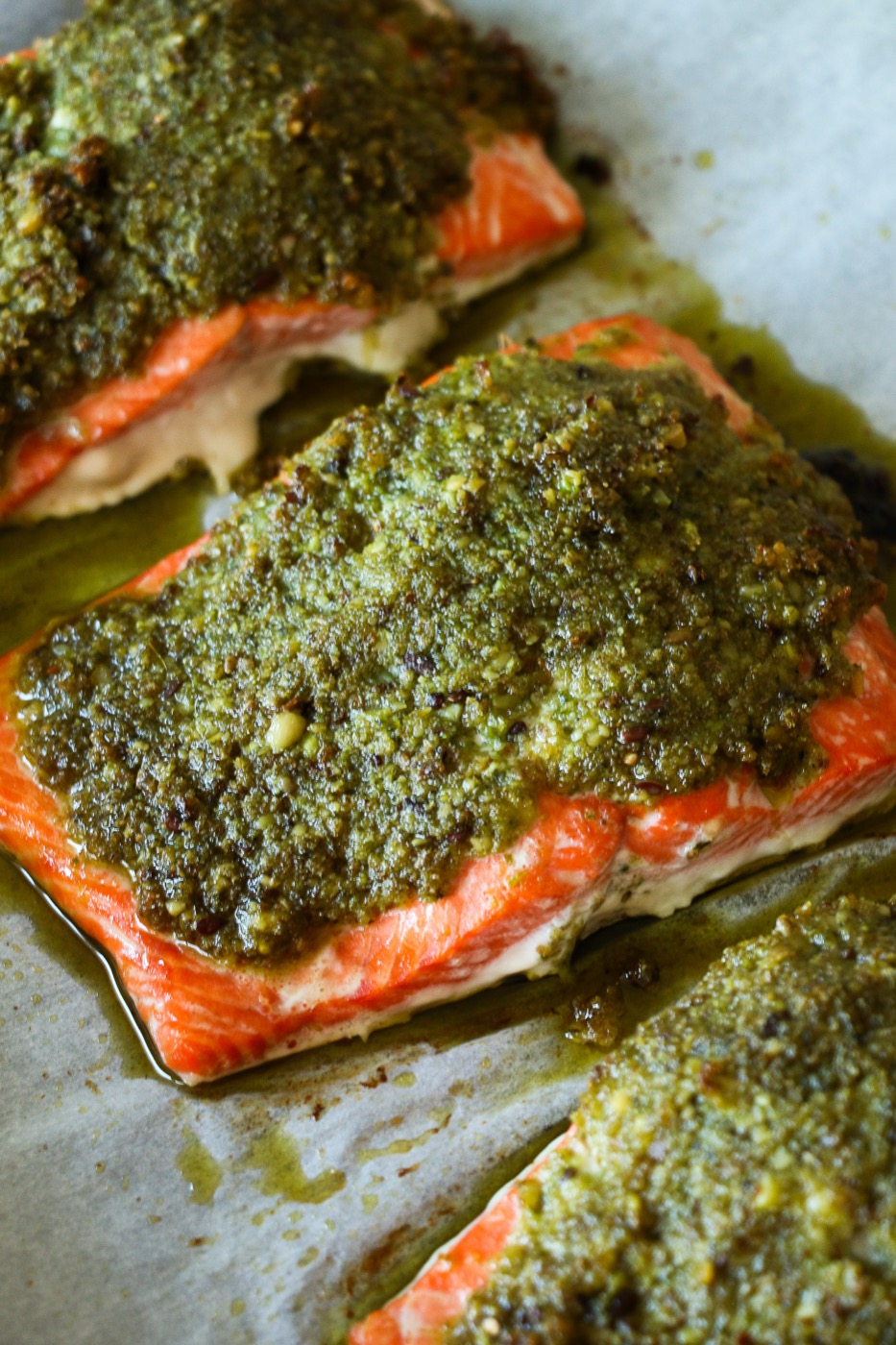
Easy Pesto Salmon
April 27, 2026
Jump to RecipeThis flavor-packed, easy pesto-crusted salmon is ready in 15 minutes, contains just three ingredients, and feels like a restaurant main, minus the price tag.
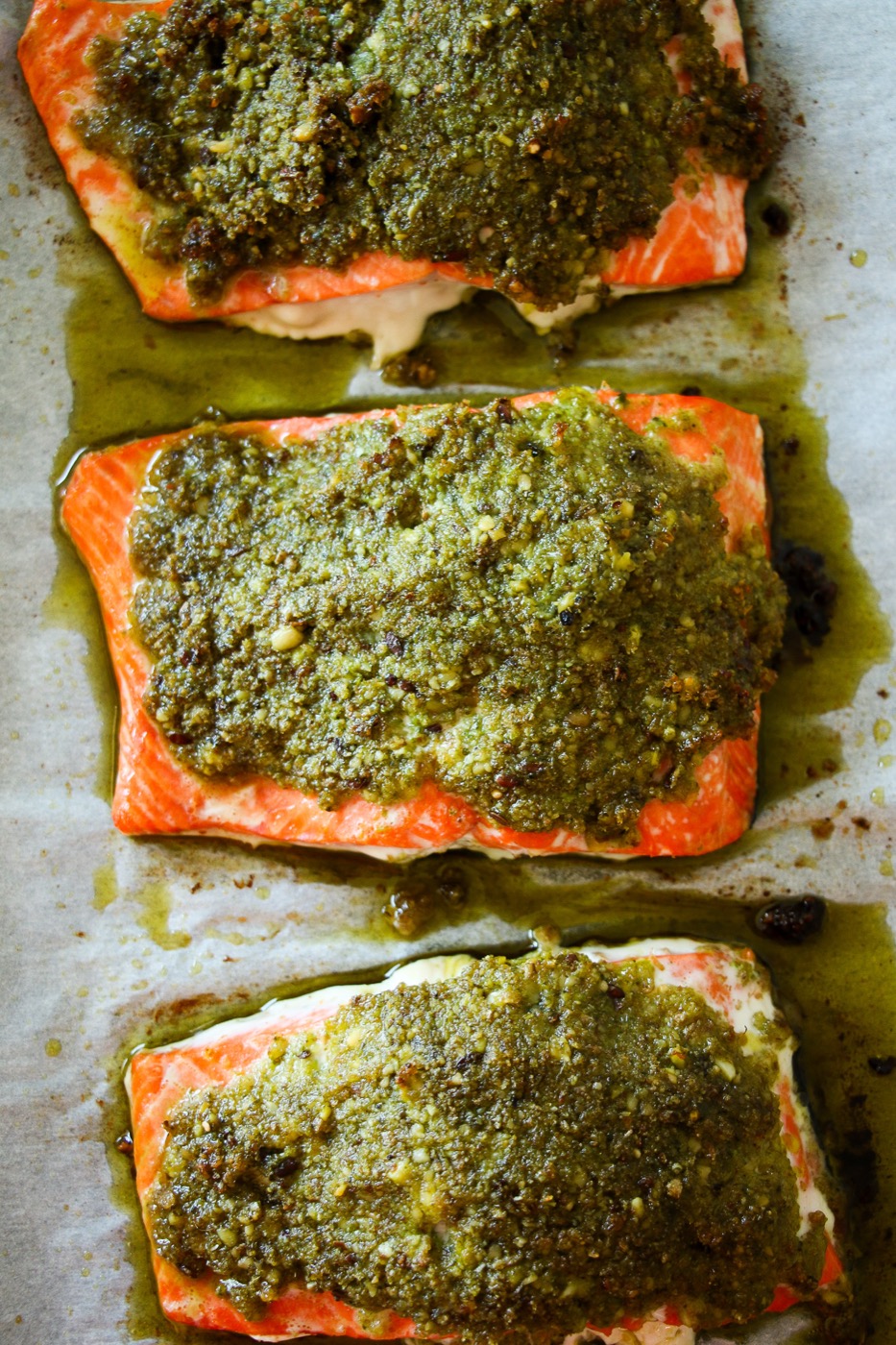
Easy pesto-crust salmon, ready in 15 minutes.
Confession: I didn’t really eat fish until I was an adult. Not because I wasn’t exposed to it, but because I couldn’t get past the smell. I can’t remember exactly when I started eating fish, but these days it’s a regular feature on our dinner table.
This pesto-crusted salmon recipe is the fish dish I make most often. We always have a big jar of Costco pesto in the fridge, and frozen salmon fillets in the freezer, and it’s ready in 15 minutes, which is a non-negotiable when you’re a working mother with young children. My kids love it and routinely devour adult-size portions (for context, they’re 3YO). And it pairs beautifully with easy sides like roasted potatoes and broccoli.
Health benefits of salmon
It’s no secret that salmon is good for you. It’s a rich source of widely underconsumed, inflammation-fighting omega-3 fats, which have been shown to be helpful for:
- Heart health, especially lowering triglycerides [1]
- Reducing joint pain in people with rheumatoid arthritis [2]
- Decreasing the risk of pregnancy and birth complications such as pre-eclampsia and pre-term birth [3]
- Improving cognition in people with mild cognitive impairment [4]
But omega-3s aren’t the only advantage of consuming salmon. Salmon is also a rich source of other shortfall nutrients such as vitamin D and potassium. Moreover, it supplies high-quality protein to support muscle building and maintenance — an increasingly important concern as we age.
Pesto-Crusted Salmon Recipe Notes
- I used Costco pesto for this pesto salmon recipe; however, you could easily make your own (you can find my quick and easy blender pesto recipe here).
- To make the recipe gluten-free, swap the panko breadcrumbs for gluten-free panko.
- If you don’t have panko on hand, make your own by putting two pieces of bread in the blender until the crumbs resemble panko.
- You can use either wild or farmed salmon in this pesto salmon recipe. Wild salmon usually has a stronger taste and farmed salmon may be a better option for someone new to eating fish.
- If you’re using frozen salmon instead of fresh, make sure it’s fully thawed before cooking and don’t skip the patting dry step to avoid a soggy pesto crust.
Best Sides For Pesto Salmon
Pesto salmon is a versatile dish that pairs with a range of sides including salads, roasted veggies and potatoes, and grains such as rice, corn, and quinoa.
Here are a few ideas for pesto salmon sides for inspiration:
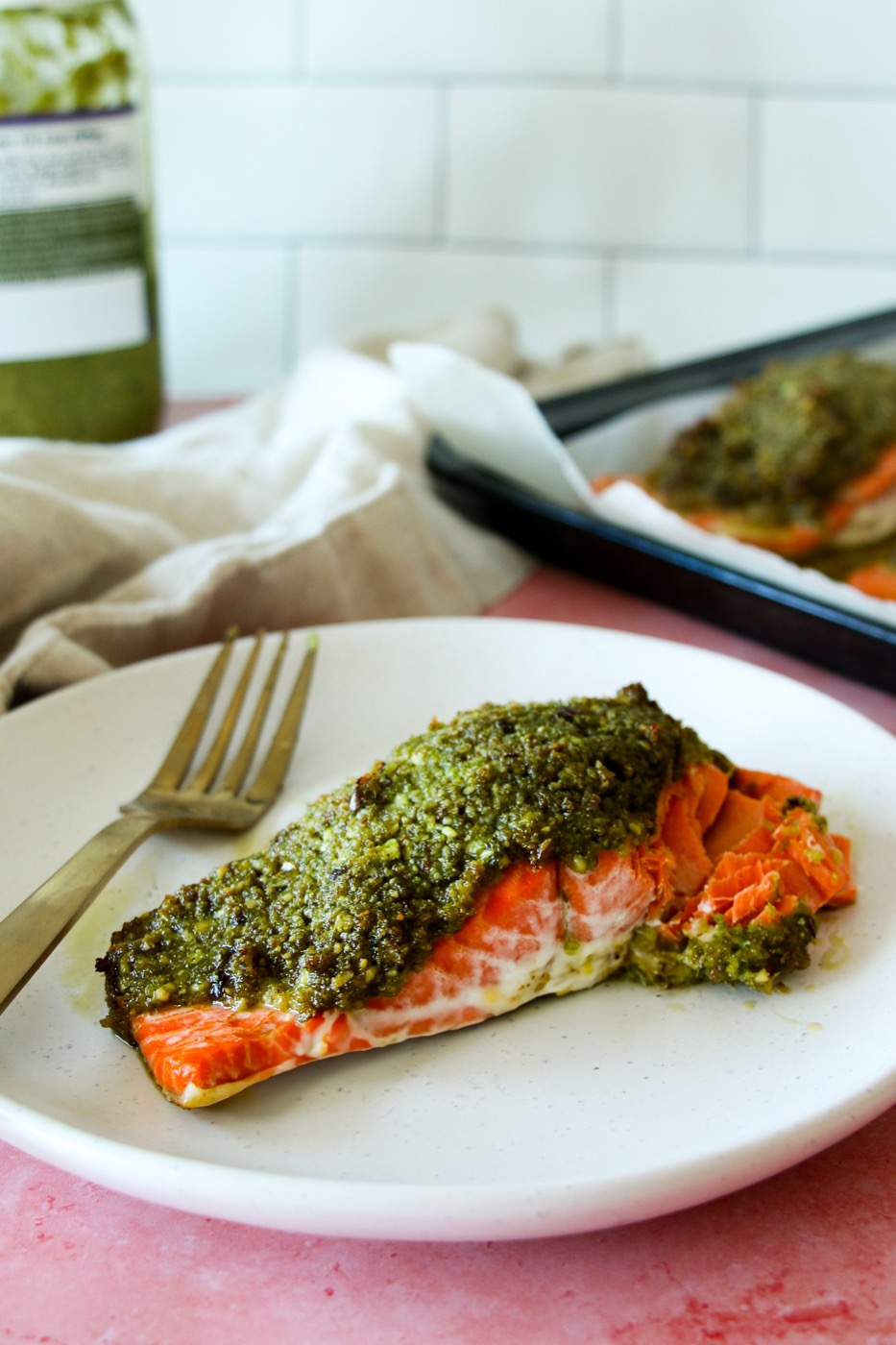
Easy pesto salmon: a quick omega-3-rich protein option for busy weeknights.
Easy Pesto Salmon
- Author: Edwina Clark, MS, RD, CSSD
- Prep Time: 5 minutes
- Cook Time: 15 minutes
- Total Time: 20 minutes
- Yield: 4 servings 1x
- Category: Lunch & dinner, mains, seafood
Description
Ready in 15 minutes and made with just three ingredients, this flavor-packed pesto salmon recipe is the ultimate combination of easy and delicious, making it a great protein choice for busy weeknights.
Ingredients
- 4 x 4oz (113g) salmon fillets
- 1/2 cup basil pesto (store-bought or homemade)
- 3/4 cup panko breadcrumbs (see notes to make the recipe gluten-free)
Instructions
- Preheat the oven to 400F (200C) and line a sheet pan with parchment paper.
- Mix together the pesto and breadcrumbs in a small bowl. The mixture should stick together but it shouldn’t be wet.
- Lay the salmon fillets on the parchment paper skin side down and pat dry with a paper towel.
- Press the pesto mixture into the salmon fillets so the top side of each fillet is completely covered.
- Insert the sheet pan into the oven and cook the salmon on the top rack for 10–15 minutes or until it reaches an internal temperature of 120–125F (49–52C).
- Remove the salmon from the oven and allow to cool slightly before serving.
Nutrition
- Serving Size: 1 salmon fillet
- Calories: 359
- Protein: 29.5g
- Carbohydrates: 16.4g
- Fiber: 1.4g
- Sugar: 1.8g
- Fat: 19.3g
- Saturated Fat: 3.4g
- Sodium: 541.2mg
- Potassium: 519.1mg
- Calcium: 100mg
- Iron: 1.7mg
- Vitamin D: 32µg
Hungry for more? Find additional healthy eats and treats here.
References:
[1] Choi, G. Y., & Calder, P. C. (2024). The differential effects of eicosapentaenoic acid and docosahexaenoic acid on cardiovascular risk factors: an updated systematic review of randomized controlled trials. Frontiers in Nutrition, 11, 1423228.
[2] Xie, L., Wang, X., Chu, J., He, X., Bao, J., Xi, Y., Wei, X., & Zhou, Q. (2025). Effects of omega-3 fatty acids on chronic pain: a systematic review and meta-analysis. Frontiers in Medicine, 12, 1654661.
[3] Abdelrahman, M. A., Osama, H., Saeed, H., Madney, Y. M., Harb, H. S., & Abdelrahim, M. E. A. (2023). Impact of n-3 polyunsaturated fatty acid intake in pregnancy on maternal health and birth outcomes: systematic review and meta-analysis from randomized controlled trials. Archives of Gynecology and Obstetrics, 307(1), 249–262.
[4] Barros, M. I., Brandão, T., Irving, S. C., Alves, P., Gomes, F., & Correia, M. (2025). Omega-3 Polyunsaturated Fatty Acids and Cognitive Decline in Adults with Non-Dementia or Mild Cognitive Impairment: An Overview of Systematic Reviews. Nutrients, 17(18), 3002.