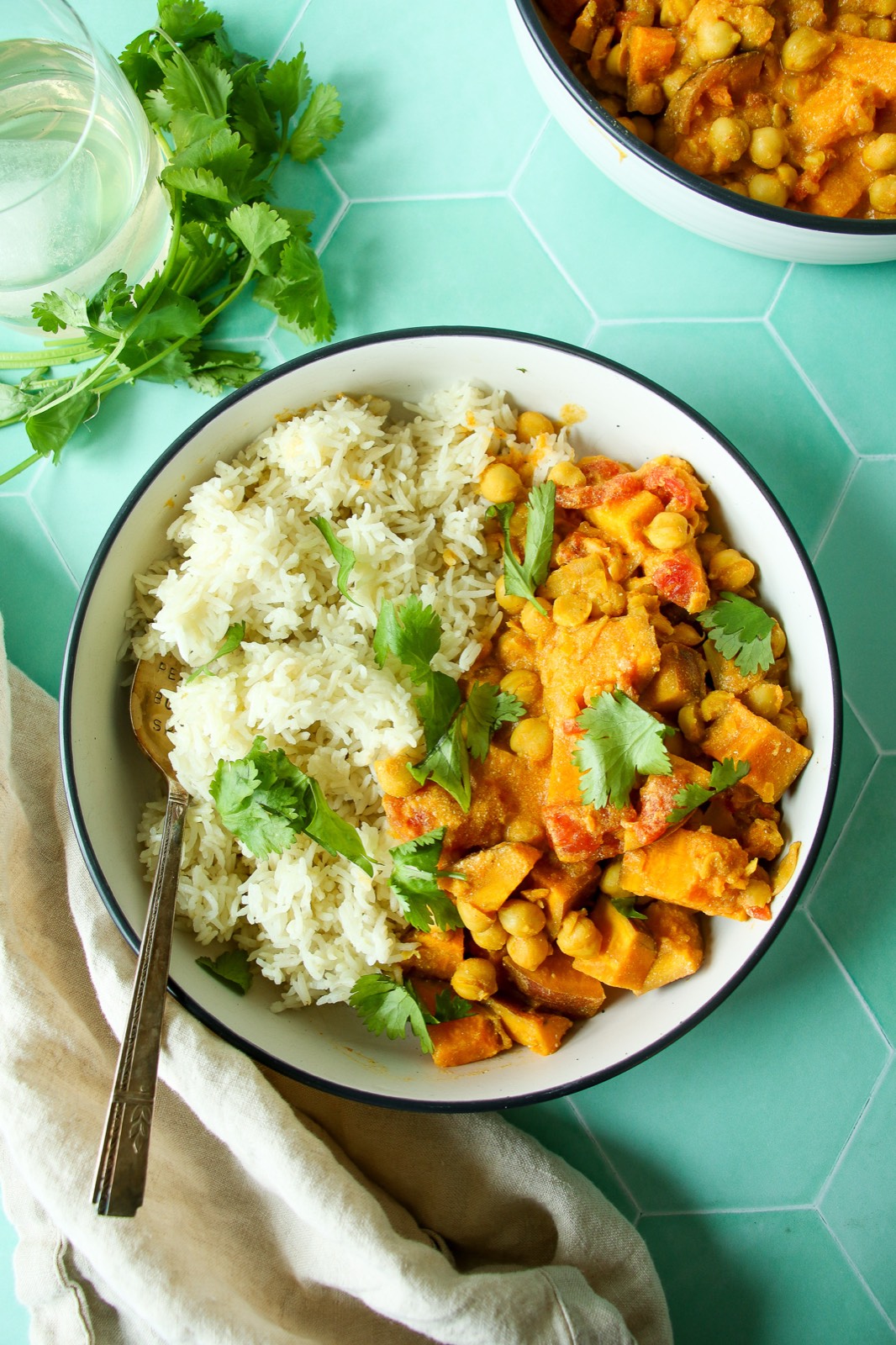
Chickpea Curry Recipe (Without Coconut Milk)
April 30, 2026
Jump to RecipeMade with canned chickpeas, sweet potatoes, canned tomatoes, and yogurt, this creamy chickpea curry relies heavily on pantry staples and comes together in under 30 minutes. Filled with fiber and plant-based protein, it delivers on both comfort and health.
Chickpea curry without coconut milk: Quick, nutritious, and delicious.
Like many of you, sometimes I don’t meal plan. Sometimes I find myself staring at the fridge at 5:30pm, wondering what I am going to cook for dinner. If you ever find yourself in that situation, this recipe is for you.
Born out of a 5:30 pm “what am I going to make for dinner” crisis, this chickpea curry recipe is the ultimate combination of health, convenience, and deliciousness. It’s creamy but without the heaviness of coconut milk, and packed with fiber-rich ingredients without feeling like you’re chomping through a bowl of roughage. Bonus: It’s made mostly with staples, and you likely have all the ingredients on hand.
Before I get to the recipe, I want to take a moment to celebrate beans, or more specifically, chickpeas — the shining star of this chickpea curry recipe. As a registered dietitian immersed in nutrition science, I can tell you that beans are one of the most underrated foods in the supermarket. And I’m not just talking about dry beans. Canned and dry beans both come with a myriad of documented health benefits.
Nutrients in Beans (including beans, chickpeas, lentils, and split peas)
- Fiber: Beans provide 3-10g of fiber per ½ cup serving (cooked). Research indicates that ~90% of people fall short of the daily fiber recommendations (28g/day for women, and 35g/day for men), and miss out on important benefits such as laxation, cholesterol control, blood sugar regulation, satiety, and gut microbiome support [1-4].
- Protein: Beans contain 7-12g of protein per ½ cup serving (cooked) and contribute to protein intake [4]. Adequate protein is important for appetite regulation, weight management, and muscle maintenance/building throughout the lifecycle.
- Micronutrients: Beans offer a diversity of nutrients, including B-vitamins, folate, potassium, iron, zinc, and magnesium, which support energy production, blood pressure regulation, and immune function, and help prevent neural tube defects in pregnant women, among other things [4].
Health Benefits of Beans (including beans, lentils, chickpeas, and split peas)
Research suggests that a bean-rich diet is beneficial for heart health, digestive health, blood glucose control, and weight management.
- Heart health: Eating beans at least four times a week is associated with an 11% reduction in cardiovascular disease risk compared to those who eat beans once a week or less [5]. Daily bean consumption also appears to assist with cholesterol reduction [5].
- Diabetes prevention: Beans are inversely associated with type II diabetes risk [5]. Furthermore, incorporating beans into a meal may help reduce the blood sugar impact of higher glycemic index foods such as white rice [5].
- Weight management: Eating 2 servings of beans per day is associated with lower BMI, decreased body weight, and improved waist circumference relative to people who do not consume beans [6].
Can I make this chickpea curry vegan?
Yes. This chickpea curry recipe is already gluten-free and vegetarian. To make it vegan, swap the plain Greek yogurt for an unsweetened dairy-free yogurt (almond, soy, or coconut all work) or stir in ½ cup of light coconut milk instead. The texture stays creamy either way.
How do I keep yogurt from curdling in curry?
Take the curry off the heat and let it cool for 5–10 minutes before stirring in the yogurt. Adding cold yogurt to a piping-hot pot causes the milk proteins to seize and curdle. The brief rest brings the curry below the curdling threshold while keeping it hot enough to serve right away.
What can I serve with chickpea curry?
This recipe is satisfying on its own, but it pairs especially well with basmati or brown rice, quinoa, cauliflower rice, naan, or roti. A side of cucumber raita or a simple green salad with lemon vinaigrette balances the warmth of the curry.
How long does chickpea curry last in the fridge?
Stored in an airtight container, this chickpea curry keeps for 3–4 days in the fridge or up to 3 months in the freezer. The flavors deepen overnight, making it a great make-ahead lunch. Reheat gently on the stovetop and add a splash of water if the sauce has thickened.
What if my chickpea curry is too thick?
Thin it out by stirring in another ¼ to ½ cup of water (or low-sodium broth for extra flavor) until the consistency is to your liking. Sweet potatoes and chickpeas absorb liquid as the curry sits, so you may need to loosen leftovers with a splash of water whenever you reheat them.
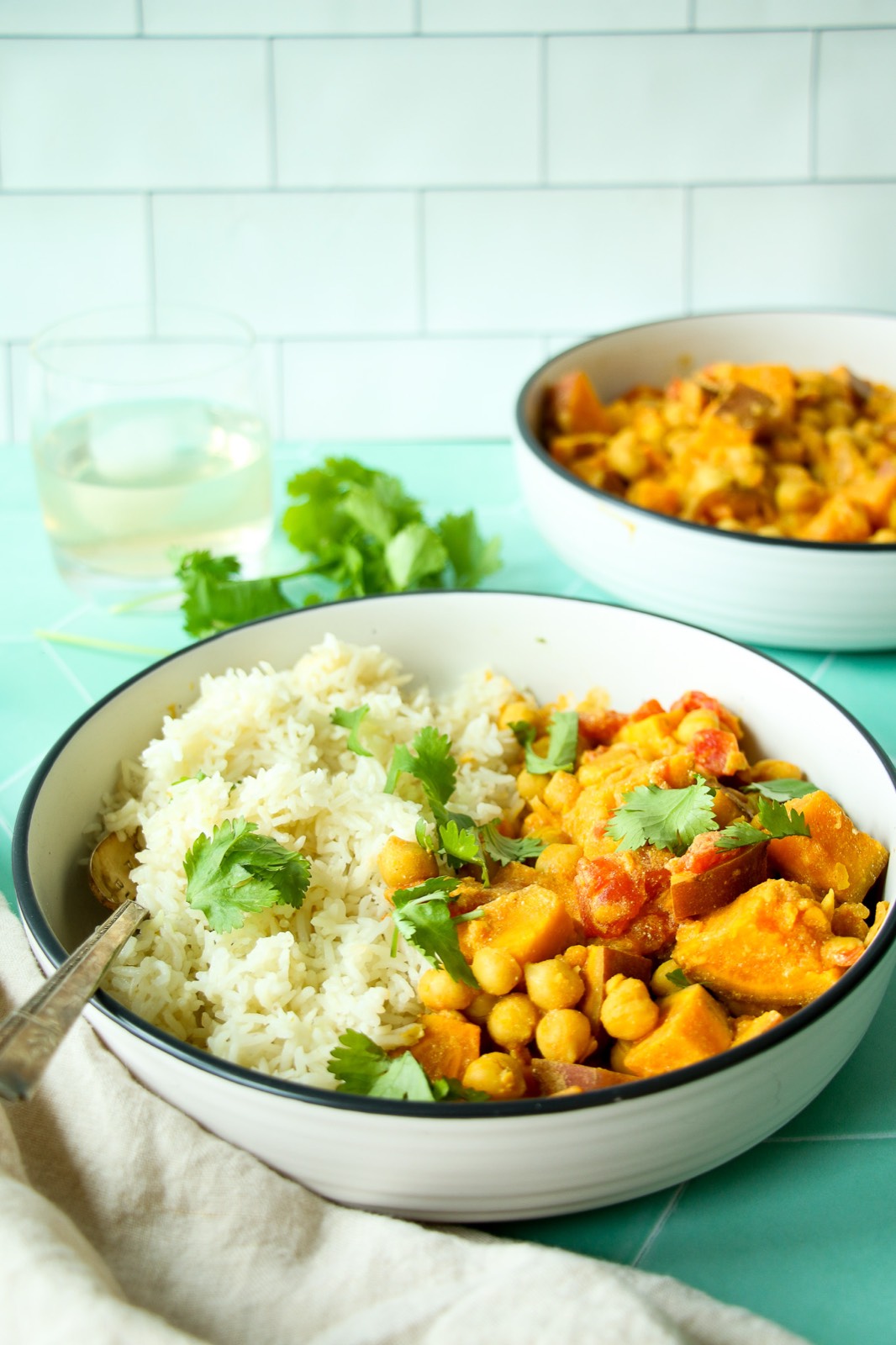
Chickpea Curry (Without Coconut Milk)
- Author: Edwina Clark, MS, RD, CSSD
- Prep Time: 10 minutes
- Cook Time: 15 minutes
- Total Time: 25 minutes
- Yield: 4 servings 1x
- Category: entree, mains
- Cuisine: Indian-inspired
Description
This recipe for chickpea curry without coconut milk comes together in minutes and is made mostly with pantry staples, making it a great choice for busy weeknights.
Ingredients
- 1 tbsp extra virgin olive oil
- ½ white onion
- 2 cloves garlic
- 1 tbsp mild curry powder
- 1 tsp ground coriander
- 1 tbsp tomato paste
- 2 sweet potatoes
- 2 x 15 oz (425g) cans chickpeas, drained and rinsed
- 1 x 15 oz (425g) can diced tomatoes
- 1.5 cups water
- ¾ tsp salt
- ½ cup plain Greek yogurt
- Fresh cilantro (optional)
Instructions
- Dice the white onion and mince the garlic.
- Chop the sweet potato into 1-inch (2.5cm) cubes and set aside.
- Add the onion, minced garlic, and olive oil to a large pot. Place on the stove and turn on to medium heat. Cook until the onions are soft and translucent.
- Add the curry powder, coriander, tomato paste, and sweet potatoes to the pot, and sauté for another minute or so.
- Add the chickpeas, diced tomatoes, water, and salt to the pot, and stir to combine. Cook with the lid on for 15 minutes or until the sweet potato is tender but not mushy.
- Remove the pot from the heat and cool for 5-10 minutes before mixing in the yogurt.
- Top with chopped cilantro (if using) before serving.
Nutrition
- Serving Size: 1 serving (¼ of recipe)
- Calories: 308
- Fat: 7.6g
- Saturated Fat: 1.1g
- Sodium: 764.1mg
- Carbohydrates: 49.1g
- Fiber: 12.5g
- Sugar: 11.3g
- Protein: 13.7g
References
- Miketinas, D., Tucker, W., Patterson, M., & Douglas, C. (2021). Usual Dietary Fiber Intake in US Adults with Diabetes: NHANES 2013–2018. Current Developments in Nutrition, 5(Suppl 2), 1061. https://doi.org/10.1093/cdn/nzab053_054
- Barber, T. M., Kabisch, S., Pfeiffer, A. F. H., & Weickert, M. O. (2020). The Health Benefits of Dietary Fibre. Nutrients, 12(10), 3209. https://doi.org/10.3390/nu12103209
- Guarneiri, L. L., Kirkpatrick, C. F., & Maki, K. C. (2025). Protein, fiber, and exercise: A narrative review of their roles in weight management and cardiometabolic health. Lipids in Health and Disease, 24, 237. https://doi.org/10.1186/s12944-025-02659-7
- USA Pulses. (2021). Pulses nutrition facts: Per half-cup cooked serving [PDF]. https://usapulses.org/uploads/joomlatools-files/docman-files/health-professionals/FINAL_Pulses_NutritionGrid_2021.pdf
- Mullins, A. P., & Arjmandi, B. H. (2021). Health Benefits of Plant-Based Nutrition: Focus on Beans in Cardiometabolic Diseases. Nutrients, 13(2), 519. https://doi.org/10.3390/nu13020519
- Papanikolaou, Y., & Slavin, J. (2024). Adult dietary patterns with increased bean consumption are associated with greater overall shortfall nutrient intakes, lower added sugar, improved weight-related outcomes and better diet quality. Nutrition Journal, 23, 36. https://doi.org/10.1186/s12937-024-00937-1
Hungry for more? Find additional healthy eats and treats here.